

| (10 intermediate revisions by 2 users not shown) | |||
| Line 1: | Line 1: | ||
<!-- FUSION 2016 PLENARY TALKS --> | <!-- FUSION 2016 PLENARY TALKS --> | ||
| − | {| id="mp-upper" style="width: | + | {| id="mp-upper" style="width: 100%; margin:4px 0 0 0; background:none; border-spacing: 0px;" |
<!-- FUSION 2016 PLENARY TALKS --> | <!-- FUSION 2016 PLENARY TALKS --> | ||
| Line 10: | Line 10: | ||
The plenary talks at the 19th International Conference on Information Fusion will feature the following keynote speakers: | The plenary talks at the 19th International Conference on Information Fusion will feature the following keynote speakers: | ||
| − | * [[Plenary_speakers#speaker1| Wednesday, July 6: Fredrik Gustafsson (Linköping University)]] | + | * [[Plenary_speakers#speaker1| Wednesday, July 6: Fredrik Gustafsson (Linköping University, Linköping, Sweden)]] |
| − | * [[Plenary_speakers#speaker2| Thursday, July 7: Simon Godsill (University of Cambridge)]] | + | * [[Plenary_speakers#speaker2| Thursday, July 7: Simon Godsill (University of Cambridge, Cambridge, United Kingdom)]] |
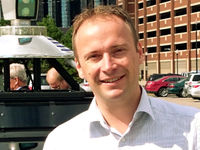
| − | * [[Plenary_speakers#speaker3| Friday, July 8: Ba Tuong Vo (Curtin University)]] | + | * [[Plenary_speakers#speaker| Friday, July 8: Oliver Pink (Robert Bosch GmbH, Abstatt, Germany)]] |
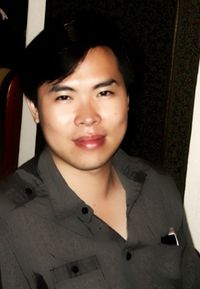
| + | * [[Plenary_speakers#speaker3| Friday, July 8: Ba Tuong Vo (Curtin University, Perth, Australia)]] | ||
|- | |- | ||
| Line 20: | Line 21: | ||
<!-- Speaker1 --> | <!-- Speaker1 --> | ||
| − | {| id="mp-upper" style="width: | + | {| id="mp-upper" style="width: 100%; margin:4px 0 0 0; background:none; border-spacing: 0px;" |
<!-- Speaker1 --> | <!-- Speaker1 --> | ||
| class="MainPageBG" style="width:100%; border:1px solid #f2ea7e; background:#ffffe8; vertical-align:top; color:#000;" | | | class="MainPageBG" style="width:100%; border:1px solid #f2ea7e; background:#ffffe8; vertical-align:top; color:#000;" | | ||
| Line 28: | Line 29: | ||
| style="color:#000;" | <div id="mp-tfa" style="padding:2px 5px"> | | style="color:#000;" | <div id="mp-tfa" style="padding:2px 5px"> | ||
<div id="speaker1"> | <div id="speaker1"> | ||
| − | === <div align="center">Fredrik Gustafsson, Linköping University</div> === | + | === <div align="center">Fredrik Gustafsson, Linköping University, Linköping, Sweden</div> === |
==== <div align="center">Project Ngulia: Tracking Rangers, Rhinos and Poachers</div> ==== | ==== <div align="center">Project Ngulia: Tracking Rangers, Rhinos and Poachers</div> ==== | ||
</div> | </div> | ||
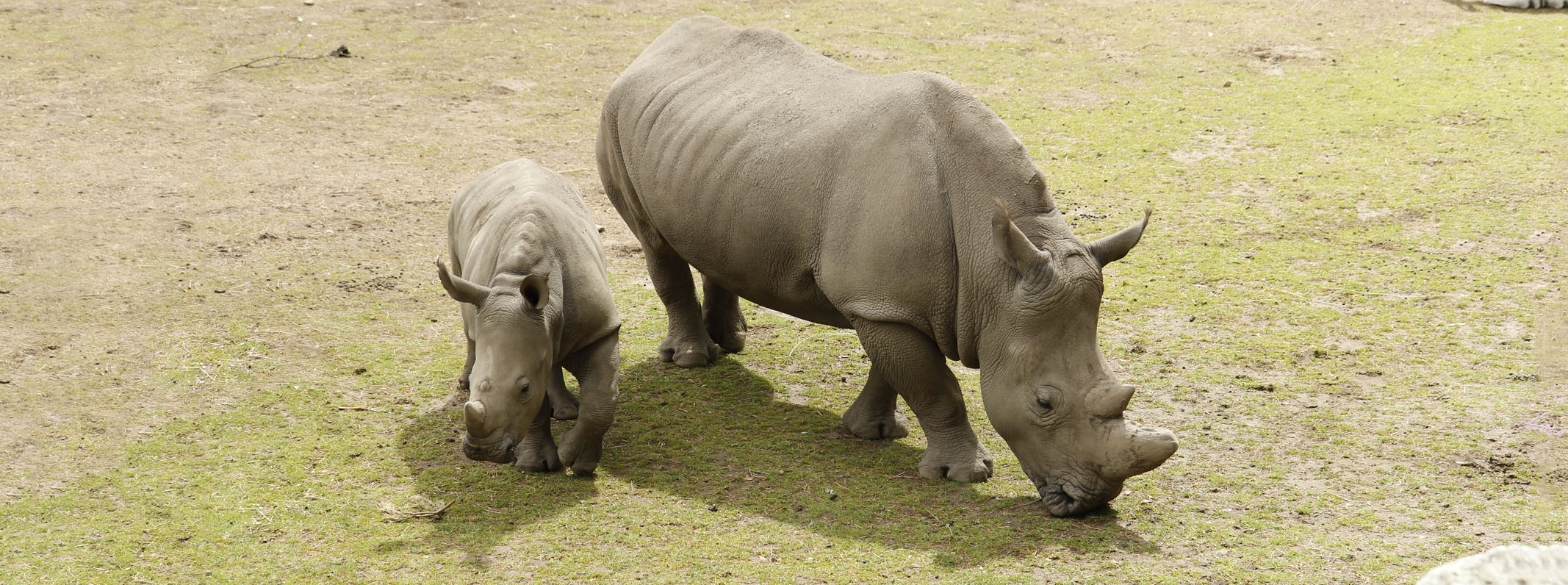
Linköping University started the initiative Wildlife Security in 2013 to support the rhino sanctuary Ngulia in Kenya with sensor fusion technology. Project Ngulia is a pilot project on border security defined by Kenya Wildlife Service, managed by the Stimson Center, Washington DC. The motivation comes from the escalating number of rhinos being poached, and the goal is to develop innovative cost efficient technology to digitise the two main tasks for the rangers: conservation and security. For both these tasks, the enabling technology is localisation of the main actors: rhinos, rangers and poachers. The presentation will describe the current status with a cloud based reporting system in Ngulia and advanced sensor systems being tested at Kolmården Zoo in Sweden. These sensor systems currently include GPS tags on animals, radar, surveillance cameras, microphone arrays, radio arrays and drones. | Linköping University started the initiative Wildlife Security in 2013 to support the rhino sanctuary Ngulia in Kenya with sensor fusion technology. Project Ngulia is a pilot project on border security defined by Kenya Wildlife Service, managed by the Stimson Center, Washington DC. The motivation comes from the escalating number of rhinos being poached, and the goal is to develop innovative cost efficient technology to digitise the two main tasks for the rangers: conservation and security. For both these tasks, the enabling technology is localisation of the main actors: rhinos, rangers and poachers. The presentation will describe the current status with a cloud based reporting system in Ngulia and advanced sensor systems being tested at Kolmården Zoo in Sweden. These sensor systems currently include GPS tags on animals, radar, surveillance cameras, microphone arrays, radio arrays and drones. | ||
| − | + | <div align="center"> | |
[[File:Kolmarden.jpg|frameless|link=http://fusion2016.org/images/2/2c/Kolmarden.jpg]] | [[File:Kolmarden.jpg|frameless|link=http://fusion2016.org/images/2/2c/Kolmarden.jpg]] | ||
| − | + | </div> | |
[[File:Fredrik2Ngulia.jpg|200px|frameless|left|Fredrik Gustafsson, Linköping University|link=]] | [[File:Fredrik2Ngulia.jpg|200px|frameless|left|Fredrik Gustafsson, Linköping University|link=]] | ||
| Line 48: | Line 49: | ||
<!-- Speaker2 --> | <!-- Speaker2 --> | ||
| − | {| id="mp-upper" style="width: | + | {| id="mp-upper" style="width: 100%; margin:4px 0 0 0; background:none; border-spacing: 0px;" |
<!-- Speaker2 --> | <!-- Speaker2 --> | ||
| class="MainPageBG" style="width:100%; border:1px solid #d6bdde; background:#f7eff7; vertical-align:top; color:#000;" | | | class="MainPageBG" style="width:100%; border:1px solid #d6bdde; background:#f7eff7; vertical-align:top; color:#000;" | | ||
| Line 56: | Line 57: | ||
| style="color:#000;" | <div id="mp-tfa" style="padding:2px 5px"> | | style="color:#000;" | <div id="mp-tfa" style="padding:2px 5px"> | ||
<div id="speaker2"> | <div id="speaker2"> | ||
| − | === <div align="center">Simon Godsill, University of Cambridge</div> === | + | === <div align="center">Simon Godsill, University of Cambridge, Cambridge, United Kingdom</div> === |
==== <div align="center">Incorporation of stochastic behaviour and intent into multiple object dynamical systems</div> ==== | ==== <div align="center">Incorporation of stochastic behaviour and intent into multiple object dynamical systems</div> ==== | ||
</div> | </div> | ||
| Line 67: | Line 68: | ||
'''Simon Godsill''' is Professor of Statistical Signal Processing in the Engineering Department at Cambridge University. He is also a Professorial Fellow and tutor at Corpus Christi College Cambridge. He coordinates an active research group in Signal Inference and its Applications and is Head of the Signal Processing and Communications Laboratory at Cambridge. His group specialises in Bayesian computational methodology, multiple object tracking, audio and music processing, and financial time series modeling. A particular methodological theme over recent years has been the development of novel techniques for optimal Bayesian filtering and smoothing, using Sequential Monte Carlo or Particle Filtering methods. Prof. Godsill has published extensively in journals, books and international conference proceedings, and has given a number of high profile invited and plenary addresses at conferences such as the Valencia conference on Bayesian Statistics (twice), the IEEE Statistical Signal Processing Workshop, the Conference on Bayesian Inference for Stochastic Processes (BISP), the IEEE Workshop on Machine Learning in Signal Processing (2013) and FUSION (2016). He co-authored a Springer text Digital Audio Restoration with Prof. Peter Rayner in 1998. He was technical chair of the IEEE NSSPW workshop in 2006 on sequential and nonlinear filtering methods, and has been on the conference panel for numerous other conferences/workshops. Prof. Godsill has served as Associate Editor for IEEE Tr. Signal Processing and the journal Bayesian Analysis. He was Theme Leader in Tracking and Reasoning over Time for the UK’s Data and Information Fusion Defence Technology Centre (DIF-DTC) and Principal Investigator on many grants funded by the EU, EPSRC, QinetiQ, General Dynamics, MOD, Microsoft UK, Citibank, Mastercard, Google, DSO Singapore, Huawei and Jaguar Landrover. In 2009-10 he was co-organiser of an 18 month research program in Sequential Monte Carlo Methods at the SAMSI Institute in North Carolina and in 2014 he co-organised a research programme at the Isaac Newton Institute on Sequential Monte Carlo methods. In 2018 he will be General Chair of the FUSION Conference in Cambridge. Two of his journal papers have recently received Best Paper awards from the IEEE and IET. He continues to be a Director of CEDAR Audio Ltd. (which has received numerous accolades over the years, including a technical Oscar), and for which he was a founding staff member in 1988. The company has commercialised many of the ideas from Professor Godsill’s research over the years. | '''Simon Godsill''' is Professor of Statistical Signal Processing in the Engineering Department at Cambridge University. He is also a Professorial Fellow and tutor at Corpus Christi College Cambridge. He coordinates an active research group in Signal Inference and its Applications and is Head of the Signal Processing and Communications Laboratory at Cambridge. His group specialises in Bayesian computational methodology, multiple object tracking, audio and music processing, and financial time series modeling. A particular methodological theme over recent years has been the development of novel techniques for optimal Bayesian filtering and smoothing, using Sequential Monte Carlo or Particle Filtering methods. Prof. Godsill has published extensively in journals, books and international conference proceedings, and has given a number of high profile invited and plenary addresses at conferences such as the Valencia conference on Bayesian Statistics (twice), the IEEE Statistical Signal Processing Workshop, the Conference on Bayesian Inference for Stochastic Processes (BISP), the IEEE Workshop on Machine Learning in Signal Processing (2013) and FUSION (2016). He co-authored a Springer text Digital Audio Restoration with Prof. Peter Rayner in 1998. He was technical chair of the IEEE NSSPW workshop in 2006 on sequential and nonlinear filtering methods, and has been on the conference panel for numerous other conferences/workshops. Prof. Godsill has served as Associate Editor for IEEE Tr. Signal Processing and the journal Bayesian Analysis. He was Theme Leader in Tracking and Reasoning over Time for the UK’s Data and Information Fusion Defence Technology Centre (DIF-DTC) and Principal Investigator on many grants funded by the EU, EPSRC, QinetiQ, General Dynamics, MOD, Microsoft UK, Citibank, Mastercard, Google, DSO Singapore, Huawei and Jaguar Landrover. In 2009-10 he was co-organiser of an 18 month research program in Sequential Monte Carlo Methods at the SAMSI Institute in North Carolina and in 2014 he co-organised a research programme at the Isaac Newton Institute on Sequential Monte Carlo methods. In 2018 he will be General Chair of the FUSION Conference in Cambridge. Two of his journal papers have recently received Best Paper awards from the IEEE and IET. He continues to be a Director of CEDAR Audio Ltd. (which has received numerous accolades over the years, including a technical Oscar), and for which he was a founding staff member in 1988. The company has commercialised many of the ideas from Professor Godsill’s research over the years. | ||
|- | |- | ||
| + | |} | ||
| + | | style="border:1px solid transparent;" |<br /> | ||
| + | |- | ||
| + | |||
| + | <!-- Speaker1 --> | ||
| + | {| id="mp-upper" style="width: 100%; margin:4px 0 0 0; background:none; border-spacing: 0px;" | ||
| + | <!-- Speaker1 --> | ||
| + | | class="MainPageBG" style="width:100%; border:1px solid #a3babf; background:#f5fdff; vertical-align:top; color:#000;" | | ||
| + | {| id="mp-left" style="width:100%; vertical-align:top; background:#e7f7e76;" | ||
| + | |||
| + | | style="padding:2px;" | <h2 id="mp-tfa-h2" style="margin:3px; background:#ceecf2; font-family:inherit; font-size:120%; font-weight:bold; border:1px solid #a3babf; text-align:left; color:#000; padding:0.2em 0.4em;">Friday, July 8</h2> | ||
| + | |- | ||
| + | | style="color:#000;" | <div id="mp-tfa" style="padding:2px 5px"> | ||
| + | <div id="speaker"> | ||
| + | === <div align="center">Oliver Pink, Robert Bosch GmbH, Abstatt, Germany</div> === | ||
| + | ==== <div align="center">Challenges on the Way to Automated Driving</div> ==== | ||
| + | |||
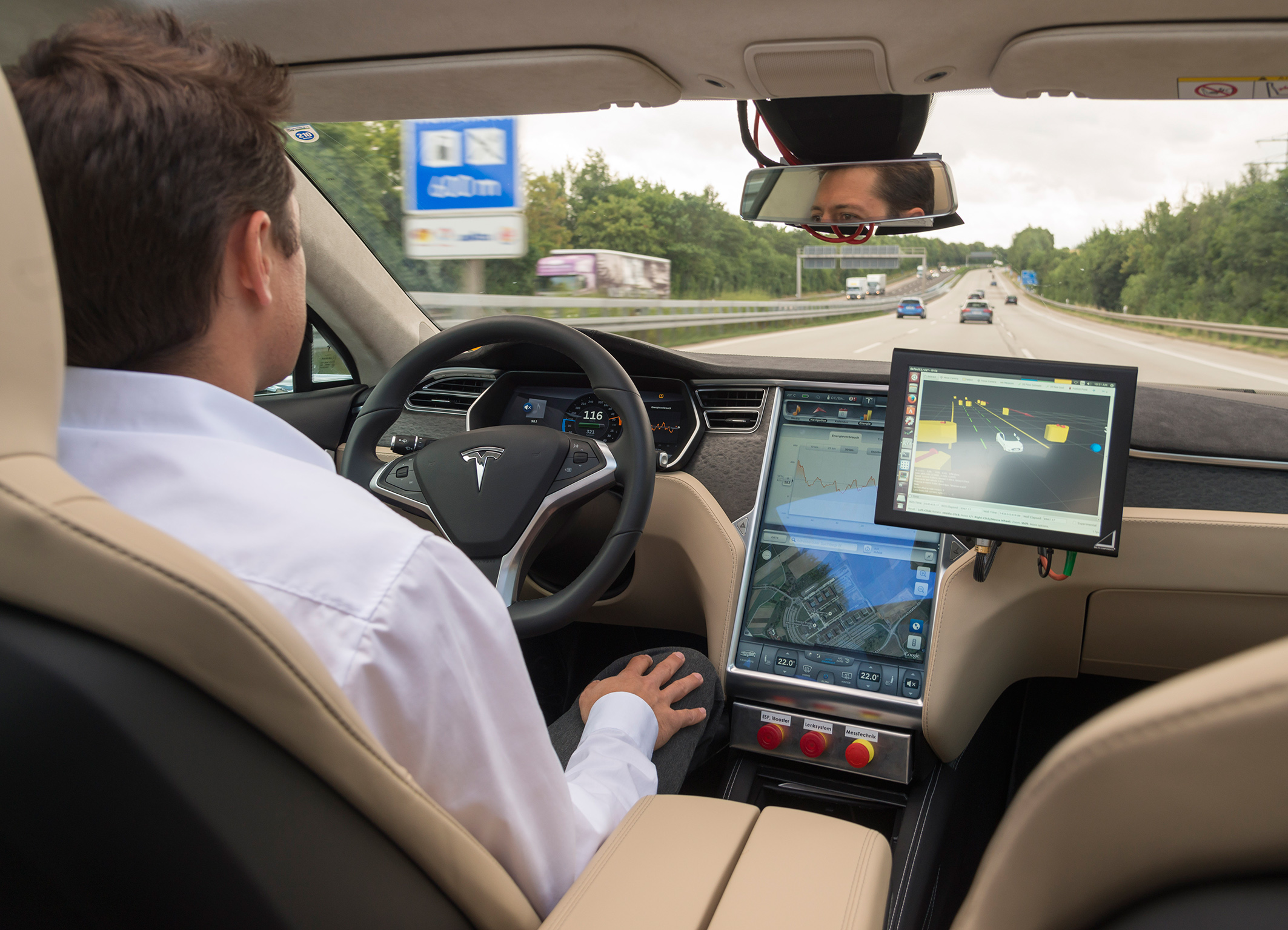
| + | Automated driving has become one of the major trends in automotive industry. While today's advanced driver assistance systems already help drivers reach their destinations safely and more comfortably, automated vehicles will be able to brake, accelerate, and steer the vehicle without permanent driver supervision.<br /> | ||
| + | The increase in safety and functional requirements when transitioning from driver assistance to automated driving has great impact on the vehicle architecture, subsystems and vehicle components. | ||
| + | |||
| + | As a component and system supplier, Bosch is actively developing solutions, such as a suitable surround sensor set, braking and steering systems, high-performance ECUs, communication infrastructure, and the development of suitable algorithms. Bosch is testing these solutions in prototype vehicles on public roads in Germany and the United States. | ||
| + | |||
| + | This talk will outline the challenges that we see on the way to automated driving, with a special focus on surround sensing and sensor fusion. Based on a set of particularly challenging use cases, key constraints for the choice of a suitable sensor set will be shown. Algorithmic approaches for fusing multiple sensors of different modalities will be discussed. The talk will further give an overview of using surround sensors for vehicle localization and map building.<br /> | ||
| + | <br /> | ||
| + | </div> | ||
| + | <div align="center"> | ||
| + | [[File:1-BBM-21368.jpg|frameless|link=http://fusion2016.org/images/e/e0/1-BBM-21368.jpg]] | ||
| + | [[File:1-BBM-21371.jpg|frameless|link=http://fusion2016.org/images/2/21/1-BBM-21371.jpg]] | ||
| + | </div> | ||
| + | [[File:IMG_0169.jpg|200px|frameless|left|Oliver Pink, Robert Bosch GmbH|link=]] | ||
| + | |||
| + | '''Oliver Pink''' is senior expert in the field of automated driving in the Chassis Systems Control division of Bosch in Abstatt, Germany. His current field of activity includes sensor fusion and environment perception for automated driving. He holds a Ph.D. in Mechanical Engineering and an M.Sc. in Electrical Engineering from the Karlsruhe Institute of Technology. His thesis topic was camera based vehicle localization. He has been active in several research areas related to automated driving since the 2007 DARPA Urban Challenge, where he participated as member of Team AnnieWay. | ||
|} | |} | ||
| style="border:1px solid transparent;" |<br /> | | style="border:1px solid transparent;" |<br /> | ||
| Line 72: | Line 105: | ||
<!-- Speaker3 --> | <!-- Speaker3 --> | ||
| − | {| id="mp-upper" style="width: | + | {| id="mp-upper" style="width: 100%; margin:4px 0 0 0; background:none; border-spacing: 0px;" |
<!-- Speaker3 --> | <!-- Speaker3 --> | ||
| − | | class="MainPageBG" style="width:100%; border:1px solid # | + | | class="MainPageBG" style="width:100%; border:1px solid #f5946e; background:#fae6de; vertical-align:top; color:#000;" | |
| − | {| id="mp-left" style="width:100%; vertical-align:top; background:# | + | {| id="mp-left" style="width:100%; vertical-align:top; background:#fae6de;" |
| − | | style="padding:2px;" | <h2 id="mp-tfa-h2" style="margin:3px; background:# | + | | style="padding:2px;" | <h2 id="mp-tfa-h2" style="margin:3px; background:#f9d6c9; font-family:inherit; font-size:120%; font-weight:bold; border:1px solid #f5946e; text-align:left; color:#000; padding:0.2em 0.4em;">Friday, July 8</h2> |
|- | |- | ||
| style="color:#000;" | <div id="mp-tfa" style="padding:2px 5px"> | | style="color:#000;" | <div id="mp-tfa" style="padding:2px 5px"> | ||
<div id="speaker3"> | <div id="speaker3"> | ||
| − | === <div align="center">Ba Tuong Vo, Curtin University</div> === | + | === <div align="center">Ba Tuong Vo, Curtin University, Perth, Australia</div> === |
==== <div align="center">Beyond the PHD Filter: Advances in Random Set Approaches</div> ==== | ==== <div align="center">Beyond the PHD Filter: Advances in Random Set Approaches</div> ==== | ||
</div> | </div> | ||
| Line 95: | Line 128: | ||
| style="border:1px solid transparent;" |<br /> | | style="border:1px solid transparent;" |<br /> | ||
|- | |- | ||
| − | + | {{Organisation}} | |
| − | + | ||
| − | { | + | |
| − | + | ||
| − | + | ||
| − | + | ||
| − | + | ||
| − | + | ||
| − | + | ||
| − | + | ||
| − | + | ||
| − | + | ||
| − | + | ||
__NOTOC____NOEDITSECTION__ | __NOTOC____NOEDITSECTION__ | ||
Latest revision as of 10:43, 29 June 2016
|
|
|
|

|
|
|